I used to think commercial real estate brokers were glorified car salesmen in expensive suits. Smooth talkers who’d show you whatever property paid them the highest commission, then disappear the moment you signed on the dotted line.
Then I lost $340,000 because I picked the wrong broker for the most important deal of my career.
It was 2019, and I was finally ready to buy my first major commercial property – a 24-unit apartment building in Phoenix. I went with Brad (not his real name), a broker recommended by my accountant. Brad had a nice office, impressive marketing materials, and claimed 15 years of experience. What he didn’t have was any real knowledge of multifamily properties or the Phoenix rental market.
Brad found me what looked like a perfect deal: a recently renovated building in a growing neighborhood, asking $2.8 million. The numbers looked good on paper – 8.2% cap rate, solid rental history, beautiful photos. I trusted Brad’s analysis and made an offer that got accepted.
Six months after closing, I discovered the neighborhood was actually declining, not growing. Three major employers had left the area in the past year, but Brad either didn’t know or didn’t care to mention it. Half the “recent renovations” were cosmetic coverups hiding serious structural issues. The rental rates Brad used in his analysis were 15% above what the market could actually support.
Why Most Broker Relationships Fail (And Cost Investors Millions)
The commercial real estate industry has a dirty secret: most brokers are order-takers, not advisors. They’ll show you whatever properties they have listed, tell you what you want to hear about market conditions, and cash their commission checks whether your deal succeeds or fails.
I’ve watched this pattern destroy investor after investor. They find a broker through a Google search or LinkedIn connection, explain their investment criteria, and assume the broker will guide them toward profitable deals. Instead, they get steered toward whatever properties need to move, regardless of whether those properties make sense for the investor’s goals.
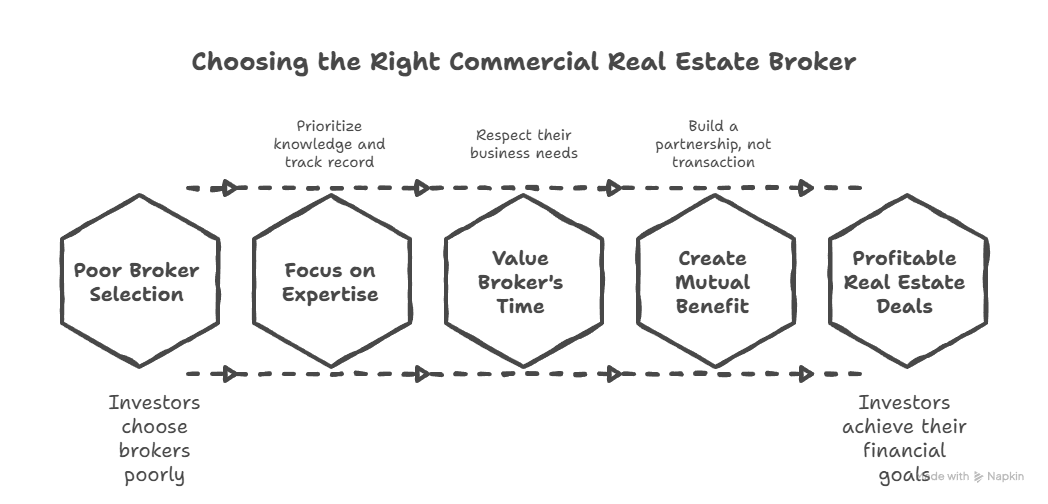
The problem starts with how most people choose brokers. They focus on surface-level credentials – years of experience, office location, professional headshots – instead of actual expertise and track record. It’s like hiring a surgeon based on their bedside manner instead of their success rate.
But here’s what really frustrates me: investors treat broker relationships as transactions instead of partnerships. They expect brokers to work for free during months of property searches, then act surprised when those brokers prioritize clients who are actually closing deals.
Good brokers are running businesses, not charities. They need to make money to survive, which means they’ll always prioritize clients who respect their time, understand their value, and create mutual benefit. If you’re not bringing anything to the table except demands for free market research, you’re going to get bottom-tier service.
How to Identify Brokers Who Actually Know What They’re Doing
After getting burned by Brad, I developed a systematic approach for evaluating commercial brokers. Here’s what I look for now, in order of importance:
Specialization Beats Generalization Every Time
The best brokers focus on specific property types and geographic markets. I want someone who eats, sleeps, and breathes multifamily properties in Phoenix, not someone who “does a little bit of everything” across multiple markets.
Specialized brokers understand nuances that generalists miss – which neighborhoods are improving versus declining, what rental rates are realistic, which property management companies are competent, how long renovations actually take. This knowledge is worth its weight in gold when you’re making six-figure investment decisions.
I ask potential brokers specific questions about their specialization:
- What percentage of your deals are property type in geographic area?
- How many property type deals have you closed in the past 12 months?
- What are current cap rates for property type in specific submarket?
- Which property management companies do you recommend and why?
If they can’t answer these questions immediately and specifically, they’re not specialized enough for my business.
Track Record Trumps Marketing Materials
I don’t care about fancy brochures or impressive office locations. I want to see actual deals closed, with specific details about property types, price ranges, and client outcomes.
When I’m evaluating a broker, I ask for references from three recent clients who bought similar properties to what I’m seeking. Not just names and phone numbers – I want to understand the specific deals, challenges that arose, and how the broker handled them.
Network Quality Over Quantity
The best brokers have relationships that matter – property managers, contractors, lenders, appraisers, attorneys, accountants. These relationships provide access to off-market deals, reliable service providers, and solutions when problems arise.
I test this by asking brokers who they’d recommend for property management, renovation contractors, and commercial lending. Good brokers immediately provide specific names with explanations of why they recommend each provider. They can tell me which contractors are reliable versus which ones overpromise, which lenders close on time versus which ones create last-minute surprises.
Communication Style Matters More Than You Think
I need brokers who communicate like professionals, not salespeople. They should ask thoughtful questions about my goals, provide honest assessments of market conditions, and explain both opportunities and risks clearly.
During initial conversations, I pay attention to whether brokers listen more than they talk. Do they ask about my investment criteria, or do they immediately start pitching properties? Do they explain market conditions objectively, or do they only focus on why “now is a great time to buy”?
The best brokers I’ve worked with challenge my assumptions and point out potential problems, even when it might cost them a sale. They’re focused on my long-term success, not just closing the current transaction.
Setting Up the Relationship for Success (Most People Skip This Step)
Once I’ve identified a broker I want to work with, I invest time in setting up the relationship properly. This prevents 90% of the problems that destroy broker-client partnerships.
Define Investment Criteria Clearly
I create a detailed investment profile that covers:
- Property types and sizes I’m interested in
- Geographic markets and specific submarkets
- Price ranges and financing parameters
- Target returns and hold periods
- Deal-breaker factors (property condition, tenant issues, etc.)
This document eliminates confusion and helps brokers understand exactly what I’m looking for. It also demonstrates that I’m a serious investor worth their time and attention.
Most investors give brokers vague criteria like “I want cash flow” or “I’m looking for appreciation.” That’s useless guidance that leads to wasted time looking at inappropriate properties.
Establish Communication Expectations
I’m explicit about how I want to communicate and how often. I prefer email for property details and documentation, phone calls for complex discussions, and in-person meetings for property tours and major decisions.
I also establish response time expectations. I tell brokers I’ll respond to property submissions within 24 hours, and I expect the same turnaround time for my questions. This creates accountability on both sides.
Clarify Fee Arrangements and Exclusivity
I discuss compensation upfront to avoid conflicts later. In most commercial transactions, sellers pay broker commissions, but I want to understand any situations where I might owe fees.
I also clarify exclusivity expectations. I typically work with one broker per market, but I’m upfront about this arrangement and the criteria I use to select primary brokers. This prevents misunderstandings and ensures brokers know where they stand.
Building Trust Through Transparency (And Why Most People Get This Wrong)
Trust in broker relationships isn’t built through friendship – it’s built through professional competence and honest communication. I’ve seen too many investors confuse personal rapport with professional capability.
Share Information, Expect Information Back
I’m transparent about my financial capacity, timeline, and decision-making process. In return, I expect brokers to share honest market assessments, property risks, and their professional opinions about deals.
When I’m pre-qualified with lenders and have liquid capital ready, I share proof of funds and financing letters. This demonstrates serious intent and helps brokers prioritize my requests.
But I also expect transparency from brokers about potential conflicts of interest. If they represent the seller, I want to know. If they have personal relationships with property managers or contractors they’re recommending, I want disclosure.
Test Honesty With Easy Verification
I occasionally test broker honesty by asking questions I already know the answers to. If a broker tells me rental rates for Class A apartments in Scottsdale are $1.80 per square foot when I know they’re $1.65, that’s a red flag about their market knowledge or willingness to exaggerate.
Good brokers admit when they don’t know something and follow up with accurate information. Bad brokers guess or provide overly optimistic estimates to keep deals alive.
Staying Informed Without Becoming a Pest
One of the biggest mistakes investors make is expecting brokers to provide free market research and education. Brokers are paid to facilitate transactions, not to write weekly market reports for tire-kickers.
Ask for Specific Information, Not General Education
Instead of asking “How’s the Phoenix market?” I ask specific questions about submarkets I’m targeting: “What are vacancy rates for Class B multifamily in Tempe, and how does that compare to six months ago?”
Specific questions demonstrate market knowledge and serious intent. General questions suggest you’re fishing for free consulting that you should be paying for.
Provide Value Back
I share market intelligence I gather from other sources – demographic reports, economic development news, information from property managers about rental trends. This creates a two-way information exchange that benefits both parties.
I also provide referrals when I meet other investors who might need broker services. Good brokers remember clients who send them business, and they prioritize those relationships during busy periods.
Problem-Solving Like Partners, Not Adversaries
Commercial real estate transactions always involve problems – financing delays, inspection issues, tenant problems, title complications. How you and your broker handle these challenges determines whether deals close successfully and whether your relationship survives long-term.
Approach Problems as Team Challenges
When issues arise, I frame them as “we” problems, not “you” problems. Instead of blaming brokers for due diligence discoveries, I ask what solutions they recommend based on their experience.
This collaborative approach encourages brokers to think creatively about solutions instead of defensively about fault assignment. I’ve salvaged deals that seemed dead because brokers felt supported rather than attacked.
Use Broker Networks for Solutions
Good brokers know people who can solve problems quickly – contractors who can provide emergency repairs, lenders who can adjust terms, attorneys who specialize in specific issues. I leverage these relationships instead of trying to solve everything myself.
Building Long-Term Partnerships That Pay Dividends
The real value in broker relationships comes from long-term partnerships, not individual transactions. Brokers who understand my investment strategy and track record can identify opportunities that perfectly match my criteria, often before they hit the market.
Stay Connected Between Deals
I maintain regular contact with my best brokers, even when I’m not actively looking for properties. I share updates on current property performance, expansion plans, and changes in investment criteria.
This ongoing communication keeps me top-of-mind when exceptional opportunities arise. I’ve gotten calls about off-market properties because brokers knew my investment timeline and criteria.
Expand Relationships Strategically
As my portfolio grows, I identify brokers in new markets where I want to invest. I ask my existing brokers for referrals to trusted colleagues in other markets, leveraging relationships I’ve already built.
These warm introductions are far more effective than cold outreach, and referred brokers take me seriously from the first conversation because of the referral source.
Create Mutual Success Stories
I track and share success stories from properties my brokers helped me acquire. When properties perform well or I complete successful renovations, I make sure brokers know about the outcomes.
These success stories become marketing tools for brokers and demonstrate the value of our partnership. Brokers who have successful client stories are more motivated to prioritize those relationships.
Red Flags That Should End Relationships Immediately
Some broker problems can be resolved through better communication. Others are character flaws that will eventually destroy deals and cost you money. Here are the red flags that make me terminate broker relationships immediately:
Lying about property details or market conditions. If I catch a broker providing false information, even once, the relationship is over. Trust is impossible to rebuild in high-stakes financial transactions.
Pushing deals that don’t meet stated criteria. Brokers who consistently ignore my investment parameters are either not listening or not competent. Either way, they’re wasting my time.
Failing to disclose conflicts of interest. If a broker represents the seller and doesn’t disclose it, or recommends service providers without mentioning financial relationships, they’re putting their interests ahead of mine.
Pressuring quick decisions without adequate due diligence time. Good brokers understand that commercial transactions require thorough analysis. Anyone who rushes decisions is prioritizing their commission over my success.
The Bottom Line: Why This Actually Matters for Your Wealth
Here’s what I wish someone had told me before I lost $340,000 on that Phoenix deal: your broker relationship is one of the most important factors in commercial real estate success. More important than market timing, financing terms, or even property selection.
Good brokers provide access to opportunities you’ll never find on your own, market intelligence that prevents costly mistakes, and problem-solving expertise that saves deals when issues arise. They’re force multipliers that dramatically improve your investment outcomes.
Bad brokers cost you money in ways you might not even realize – by showing you overpriced properties, missing market trends, providing inadequate due diligence, or simply wasting your time on deals that never had a chance of success.

