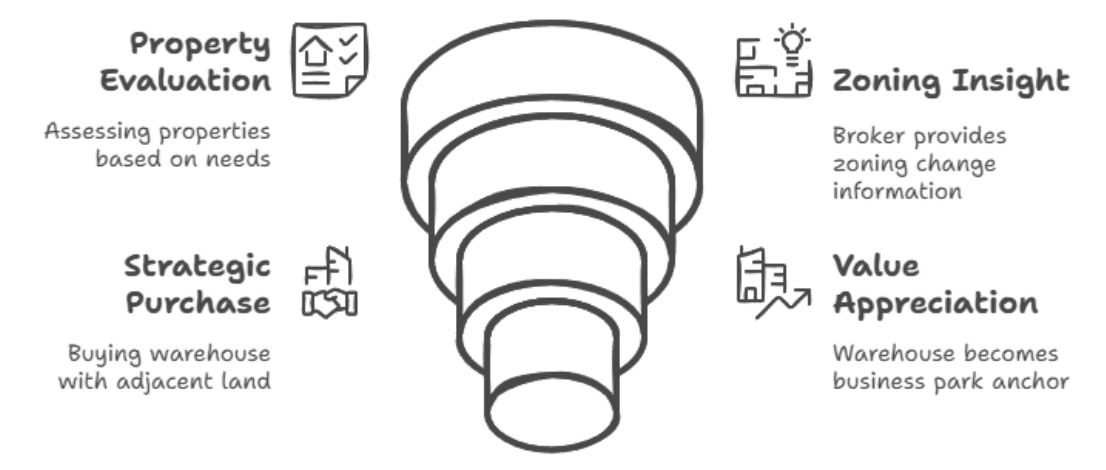
Two years ago, I was working with a client who was looking to acquire a warehouse for his expanding logistics business. We’d been searching for months, looking at dozens of properties, and frankly, we were both getting frustrated. The properties that met his operational needs were either overpriced or in terrible locations. The ones in good locations didn’t have the infrastructure he needed for his business.
Then my broker mentioned something almost in passing during one of our property tours: “You know, the city is planning to rezone this entire industrial corridor next year. Most of these warehouses are going to be able to add office components without variances.” That one piece of information completely changed how we evaluated properties in the area.
We ended up purchasing a warehouse that seemed mundane on paper – decent location, fair price, adequate infrastructure. But knowing about the coming zoning changes, we structured the deal to include adjacent land that would become much more valuable once mixed-use development was permitted. Eighteen months later, that “mundane” warehouse had become the anchor of a small business park worth significantly more than we’d paid for the entire property.
That experience taught me something important: the real value of a great broker isn’t just in finding properties or negotiating deals. It’s in the information, insights, and market intelligence that comes from years of working in specific submarkets. Information that isn’t available in online listings or public databases.
Why You Actually Need a Broker
Let’s be honest – with all the information available online today, it’s tempting to think you can handle commercial real estate transactions yourself. Property listings are everywhere, market data is readily available, and there are plenty of resources for learning about the process. So why involve a broker at all?
The answer lies in what you can’t easily access or interpret on your own. Every market has nuances that take years to understand. Zoning requirements that aren’t obvious from online records. Relationships between property owners, city planners, and major tenants that influence property values. Upcoming infrastructure changes that will dramatically affect accessibility and desirability.
I’ve seen sophisticated investors make expensive mistakes because they relied solely on publicly available information. They understood the financial analysis, they knew how to evaluate cash flows, but they missed critical local factors that a good broker would have caught immediately.
A strong broker also brings negotiation experience that’s hard to replicate. They know how different types of sellers think, what motivates them, and how to structure offers that get accepted in competitive situations. More importantly, they understand when to walk away from deals that look attractive on the surface but have hidden problems.
The network aspect is huge too. Good brokers hear about opportunities before they hit the market. They know which properties might become available even when the owners haven’t officially decided to sell. In tight markets, these off-market opportunities can be the difference between finding the perfect property and settling for something less ideal.
Finding the Right Broker Match
Not all commercial real estate brokers are created equal, and specialization matters more in commercial than in residential real estate. A broker who excels at selling retail properties might not understand the nuances of industrial acquisitions. Someone who focuses on investment sales might not be the best choice for owner-user purchases.
The interview process for selecting a broker should feel like you’re hiring a key advisor, not just a service provider. I recommend asking specific questions about recent transactions they’ve handled that are similar to what you’re trying to accomplish. Don’t just ask about their successes – ask about deals that didn’t work out and what they learned from those experiences.
Market knowledge goes beyond knowing current prices and recent sales. A great broker understands the forces driving change in their market. They know about planned developments, infrastructure improvements, demographic shifts, and major employers’ expansion or contraction plans. They should be able to explain not just what properties are available, but why certain areas are becoming more or less attractive over time.
Personal chemistry matters too. You’re going to be working closely with this person for months, possibly years if you’re an active investor. They need to understand your communication style, your decision-making process, and your risk tolerance. If you prefer detailed analysis, you want a broker who provides comprehensive market reports. If you make quick decisions based on gut feel, you need someone who can present opportunities efficiently without overwhelming you with data.
Red flags include brokers who promise unrealistic results, who can’t provide references from recent clients, or who seem to be juggling too many clients to give you adequate attention. You also want to be cautious of brokers who push you toward properties that don’t match your stated criteria or who seem more interested in closing any deal rather than finding the right deal for your specific situation.
Setting Clear Objectives (And Why Vague Goals Kill Deals)
Here’s where I see most broker-client relationships go wrong: unclear or constantly changing objectives. I’ve worked with clients who say they want “a good investment property” and then reject every opportunity because they haven’t really defined what “good” means to them.
The most successful broker relationships I’ve observed start with very specific goal-setting sessions. Not just “I want to buy an office building,” but “I want to acquire a 20,000-50,000 square foot office building in the northwest suburban market, with at least 80% occupancy, that can generate a 7% cash-on-cash return, with the potential to increase rents over the next 3-5 years.”
Financial objectives need to be specific. What returns are you targeting? What’s your acceptable level of risk? How much capital do you want to deploy? What’s your timeline for acquisition and potential exit? If you’re an owner-user, what are your space requirements, and how might they change over time?
But objectives go beyond numbers. Some clients prioritize prestige and location over returns. Others want properties they can improve through active management. Some are looking for truly passive investments, while others enjoy being hands-on with their real estate. Understanding your personal preferences and constraints helps your broker identify opportunities that align with your actual goals, not just your financial criteria.
I always recommend putting these objectives in writing and reviewing them periodically. Markets change, personal circumstances evolve, and opportunities arise that might cause you to adjust your criteria. Having clear, documented goals gives you and your broker a framework for evaluating how well you’re working together.
Communication That Actually Works
Effective communication with your broker goes way beyond responding to emails and showing up for property tours. The best broker-client relationships involve ongoing dialogue about market conditions, deal flow, and evolving opportunities.
Regular check-ins are crucial, even when nothing specific is happening. Monthly market updates help you understand how conditions are changing and why certain types of properties are becoming more or less attractive. These conversations also give your broker insights into how your thinking might be evolving based on what you’re seeing in the market.
When you tour properties, provide specific feedback about what you liked and didn’t like. Instead of just saying “it’s not for me,” explain whether the issue was location, condition, tenant mix, pricing, or something else. This helps your broker refine their search and understanding of your preferences.
Be honest about your decision-making process and timeline. If you need to consult with partners or advisors before making offers, let your broker know upfront. If you’re the type who needs to see a lot of options before deciding, that’s fine, but communicate that so your broker can plan accordingly. If you prefer to move quickly on the right opportunity, make sure they understand that pace.
Don’t hesitate to ask questions, even if they seem basic. Good brokers want educated clients who understand what they’re doing and why. Ask about market trends, financing options, due diligence processes, and anything else that affects your decision-making. The more you understand about the market and process, the better decisions you’ll make.
Leveraging Market Intelligence and Networks
The real value of an experienced broker often lies in information that’s not publicly available. They know about properties that might come to market before they’re officially listed. They understand the motivations and situations of various property owners. They have relationships with lenders, attorneys, accountants, and other professionals who can facilitate transactions.
This network effect extends beyond just finding properties. A well-connected broker can help you understand financing options you might not have considered, introduce you to other professionals you’ll need for due diligence and closing, and provide insights into negotiating strategies that work with specific sellers.
I’ve seen brokers use their networks to solve problems that could have killed deals. Maybe the seller needs a quick closing but the buyer needs more time for due diligence – the broker knows a lender who can provide bridge financing. Maybe zoning issues arise, but the broker has relationships with city planners who can explain the approval process. These problem-solving capabilities often make the difference between successful and failed transactions.
The key is finding a broker who’s genuinely well-connected in your target market, not just someone who claims to know everyone. You can usually tell the difference by asking specific questions about recent market activity and seeing how detailed and insightful their responses are.
Managing Potential Conflicts
Commercial real estate brokers face potential conflicts of interest that clients need to understand and address. The most obvious is dual agency situations, where the same broker represents both buyer and seller. While this is legal with proper disclosure in most areas, it inherently creates tension between maximizing value for the seller and minimizing cost for the buyer.
Some brokers also invest in properties themselves or have ownership interests in development projects. Others have exclusive relationships with certain lenders or service providers that might influence their recommendations. None of these situations automatically disqualify a broker, but they need to be disclosed and discussed openly.
The best approach is to address potential conflicts upfront during the broker selection process. Ask about their policies on dual agency, their investment activities, and any business relationships that might affect their recommendations. Look for brokers who are transparent about these issues and who have clear procedures for managing conflicts when they arise.
In practice, most conflicts can be managed through transparency and clear communication. If your broker has a potential conflict in a specific transaction, they should disclose it immediately and give you the option to seek separate representation if you’re not comfortable proceeding.
Measuring Success and Adjusting Course
Like any professional relationship, your partnership with a commercial real estate broker should be evaluated regularly to ensure it’s meeting your needs and producing results. This doesn’t mean second-guessing every decision, but it does mean having honest conversations about whether the relationship is working.
Set measurable goals at the beginning of the relationship. How many properties do you want to see per month? What’s a reasonable timeline for finding suitable opportunities? How quickly should your broker respond to your calls and emails? Having specific expectations makes it easier to evaluate performance objectively.
Track the quality of opportunities your broker brings you. Are the properties generally within your criteria, or are you consistently seeing things that don’t match your objectives? Is your broker learning from your feedback and refining their search accordingly? Are they proactively bringing you market intelligence that helps you make better decisions?
Pay attention to your broker’s responsiveness and communication style. Do they return calls promptly? Do they provide regular market updates even when there aren’t specific properties to discuss? Do they seem genuinely interested in your success, or are they just trying to close any available deal?
Don’t hesitate to provide feedback when things aren’t working well. Good brokers want to improve their service and will appreciate constructive criticism. If fundamental issues can’t be resolved, it may be time to find a different broker. The commercial real estate market is relationship-driven, and the wrong broker relationship can cost you time, money, and opportunities.
Making It Work Long-Term
The best commercial real estate broker relationships develop over multiple transactions and evolve as your needs change. A broker who helps you acquire your first investment property should understand how your goals might change as you build a portfolio. Someone who finds space for your growing business should anticipate your future expansion needs.
This long-term perspective benefits both parties. Brokers develop deeper understanding of your preferences and objectives, making them more effective at identifying opportunities. Clients benefit from working with someone who knows their history and can provide continuity across multiple transactions.
The key is treating your broker as a strategic advisor rather than just a transaction facilitator. Include them in your planning discussions. Ask for their input on market timing, property types, and geographic areas. Use their market knowledge to inform your investment strategy, not just your individual purchase decisions.
Commercial real estate is complex enough that having the right professional guidance can make a significant difference in your results. The time invested in finding the right broker and building an effective working relationship pays dividends across multiple transactions and over many years.
The warehouse deal I mentioned earlier turned out well partly because of market timing and partly because of luck. But mostly it succeeded because my broker understood the market well enough to spot an opportunity that wasn’t obvious to most people. That’s the kind of insight and expertise that makes working with the right broker invaluable – and it’s why getting the relationship right matters so much.

)